
Boxelder Bugs (Maple Bugs) in Toronto: Why They Swarm Your Home in October and How to Get Rid of Them
TL;DR
- The red-and-black insects gathering on your sunny brick, siding and window frames this month are boxelder bugs. In Ontario they are usually called maple bugs. Same insect.
- They are harmless. They do not bite, do not damage the house and do not breed indoors. The ones that reach a warm room do not feed or breed there and die off; others may sit inactive in wall voids and attics until spring, which is why a few can turn up on mild winter afternoons. The one lasting cost is the stain they leave when crushed.
- October tends to be the peak because the adults are leaving Manitoba maple and other maple trees to find a warm place to spend the winter, and a south- or west-facing wall is often the warmest spot on the street. The extension guidance describes the same October pattern, according to Wisconsin Horticulture.
- Sealing gaps, vacuuming the ones that get in, and an exterior treatment timed to the weeks they cluster are the measures the extension guidance supports. Cutting down the tree and spraying indoors are unlikely to help.
What boxelder bugs are, and how to tell them from stink bugs
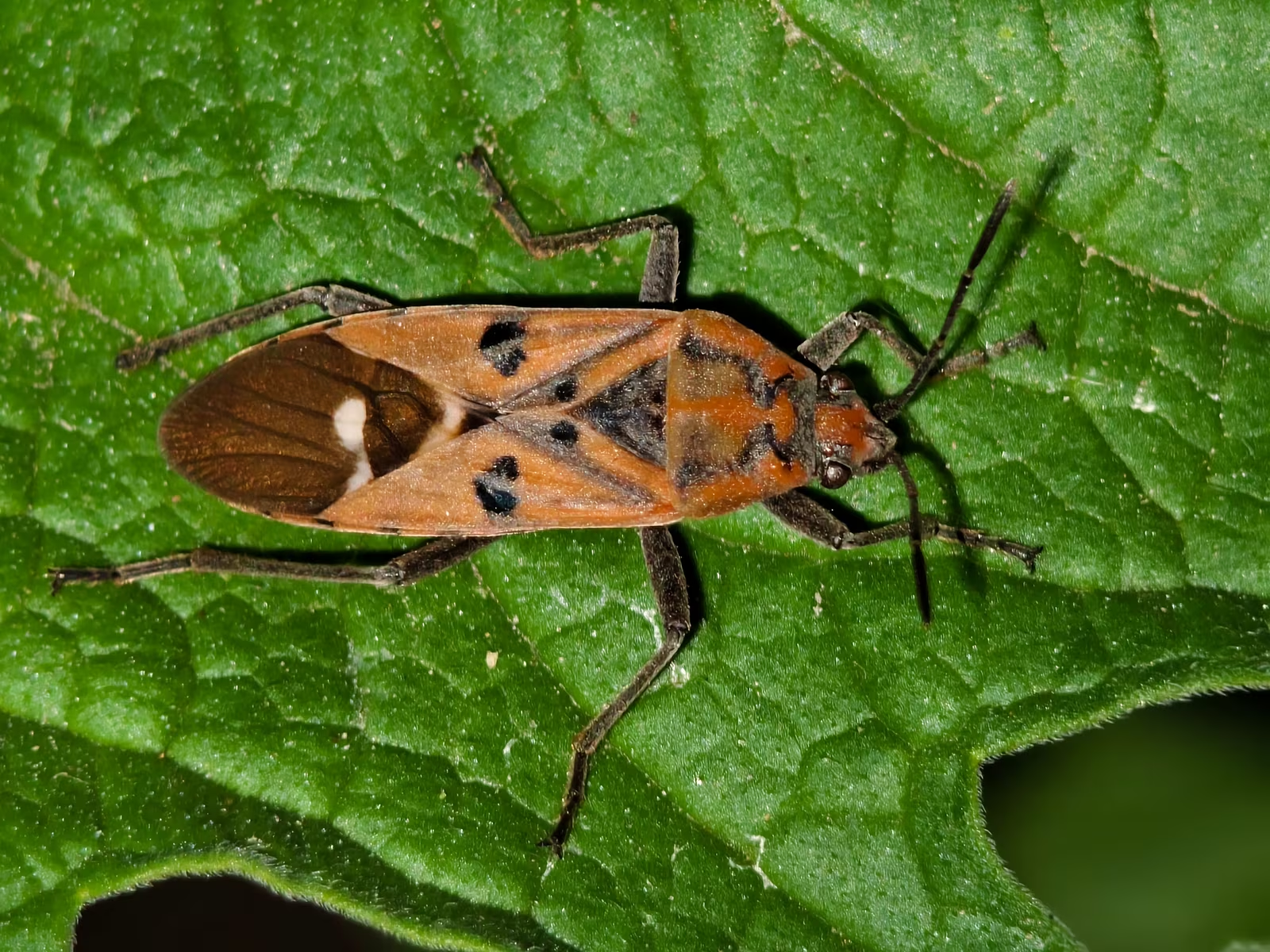
An adult boxelder bug (Boisea trivittata) is about 12 mm long, roughly half an inch, flat, and black with three orange-red stripes on the section just behind the head. The wings lie flat and cross over the back in an X. Young ones (nymphs) are bright red with darker heads and look like wingless adults (Wisconsin Horticulture, University of Wisconsin-Madison Extension).
Two look-alikes cause confusion in a Toronto October:
- Brown marmorated stink bugs are larger, shield-shaped and mottled brown with no red markings. They invade homes in the same weeks for the same reason, so it is common to see both on the same wall.
- Milkweed bugs are orange and black too, but the orange covers much of the body rather than three narrow stripes. The three lengthwise red lines behind the head are what separate a boxelder bug from the small milkweed bug and the other red-and-black true bugs it is mistaken for, according to the UC Statewide IPM Program, whose note describes the closely related western boxelder bug (Boisea rubrolineata) and the same markings.
If you are not sure which one you are looking at, our pest identifier walks through the common Toronto species, or send us a photo and we will tell you.
Why they show up on Toronto homes in October
Boxelder bugs spend spring and summer on boxelder trees, which Ontarians know as Manitoba maple (Acer negundo), feeding on sap from the leaves and the developing seeds of the female trees. They turn up on ash and other maples as well, though they rarely complete their development there, and they rarely cause significant damage to any tree, according to Wisconsin Horticulture. Manitoba maple grows almost anywhere it is allowed to in the GTA, along ravines, rail corridors, hydro cuts and back lanes, which is why the bugs are so widespread here.
A second generation of adults matures by late summer, and those adults leave the trees to find a place to pass the winter. That search is what puts them on your house:
- They want warmth. They congregate in sunny spots on the south and west sides of buildings on warm afternoons, and they are drawn to buildings with a lot of southern exposure regardless of colour.
- They can travel. The adults are strong fliers and move a considerable distance from the host tree, so a house with no maple on the lot still gets them.
- They push into gaps as the weather cools: small openings around windows, doors and pipes, and small cracks in the foundation or siding. Some stop in the wall void or attic and stay there, inactive, as long as they remain cold. Warm them with the furnace or a sunny January afternoon and they wake up and crawl toward the light.
Numbers swing from year to year. They tend to be most abundant after a very warm May and a dry July, but the count also varies a great deal from one street to the next regardless of the weather, according to Wisconsin Horticulture. That is why one October brings a few dozen and the next brings thousands.
Are boxelder bugs harmful?
No. This is the part people searching "should I worry about boxelder bugs" want settled first, so here it is plainly, with the extension research behind it, according to Wisconsin Horticulture:
- They will not bite humans or pets.
- They do not damage food or other items in the home, and they do not eat wood, wiring or fabric.
- They do not feed or reproduce inside. The bugs you see indoors between November and April entered the previous autumn.
- They do not feed or reproduce indoors, so the ones that emerge into living space die off without establishing anything.
The two genuine nuisances are cosmetic. Their droppings may stain curtains, walls and light-coloured siding, and like their stink bug relatives they release an unpleasant odour when crushed. That is the whole reason for the advice to vacuum them rather than squish them: a crushed boxelder bug on a cream wall leaves a mark that outlasts the bug by a season.
Where they get in
Think of the exterior of the house as a set of small openings. Boxelder bugs find the same ones year after year:
- torn or ill-fitting window and door screens
- unscreened or damaged roof, soffit, bathroom and kitchen vents
- gaps where cables, pipes, outdoor taps and dryer vents pass through the wall
- the bottom edge of exterior doors with no sweep, and garage doors with no rubber seal
- cracks where two materials meet: brick to wood trim, siding to foundation, fascia to roofline
- older vinyl siding, which often has too many gaps to seal completely
Two details from the extension guidance matter in Toronto. First, the bugs also hide and overwinter in piles of leaves, boards, rocks and debris against the house, so the UC IPM programme's guidance for the western boxelder bug recommends keeping a strip roughly 1.8 to 3 m (6 to 10 feet) wide around the foundation clear of leaves, weeds and seed litter, particularly on the south and west sides, according to the UC Statewide IPM Program. Second, the weep holes along the bottom course of a brick or stone-veneer wall are there to drain and ventilate the wall. Do not caulk them. Hardware stores sell ventilation plugs that keep insects out while letting the wall breathe.
What actually works in October
The honest answer is that the right time to boxelder-proof a house was late summer, before the first wave. In October you are managing the wave that is already here, and three things still pay off.
Outside: seal and, if the numbers justify it, treat. Caulk what you can reach around windows, doors, pipes and utility entries now; it reduces this year's intake and does much of next year's work, according to Wisconsin Horticulture. Where bugs are collecting by the hundreds on a sunny wall or around an entry door, an exterior treatment with a product registered for exterior use, applied by a licensed technician where they cluster, may reduce the number that get in. Sealing remains the measure that lasts. Timing matters: the treatment should go on while they are massing on the exterior, usually from late September into October, not in winter and not in spring. In a heavy year a second visit may be needed as new arrivals keep coming.
Inside: vacuum, do not spray. Once they are indoors the practical control is a vacuum or a broom and dustpan, with the bag emptied outside. Insecticide sprays are generally not recommended for boxelder bugs that have already made their way indoors: the insects you can see will die off on their own, the ones in the wall void cannot be reached, and spraying inside the house does nothing to the number that arrive next autumn.
Hot, soapy water for the clusters you can see. The extension advice is that clusters on the sides of a building can be sprayed with insecticidal soap or hot, soapy water, and that the spray usually needs repeating as more bugs arrive. It is a tidy-up, not a solution, because the next sunny afternoon refills the wall. Use it to keep the doorway clear while the sealing and treatment do the real work.
What not to waste time or money on
- Cutting down or spraying the maple, on its own. Removing a boxelder tree, or having a heavily infested tree treated in mid-summer, may help reduce numbers, according to Wisconsin Horticulture, and the UC Statewide IPM Program calls removing seed-bearing host trees the most effective control for the western species. Both add the same caveat: the adults fly several blocks, so removal on your lot rarely solves the problem while nearby host trees remain, and the tree is often worth more than the nuisance. If you are planting a shade tree, the extension advice is to choose another species.
- Indoor insecticide and foggers. They cannot reach the wall voids where the bugs are, and the bugs in the open die off anyway.
- Spring treatments. The bugs on your wall in April are leaving, not arriving, so treating them does little for the following autumn.
- Repellent plug-ins and ultrasonic devices. There is little independent evidence that these move any pest, and none for boxelder bugs.
How Pesticon handles a boxelder call
Boxelder bugs are one of the few pests where the honest advice is often "you may not need us". When a call does come in, it typically follows the five steps in Pesticon's documented service process, and each step maps onto what the extension research says works:
- Inspection. Identify the pest, the scale of the problem and the entry points. For boxelder bugs, the entry points the extension guides name are the places two materials meet: window and door frames, the gaps around pipes and cables, and cracks where siding or trim meets the foundation, according to Wisconsin Horticulture.
- Treatment plan. A plan built on approved methods. For this pest that usually means exclusion first and an exterior-only product second, because the extension guidance is that indoor sprays are not recommended once the bugs are inside, and that spraying in spring has no effect on the following autumn.
- Extermination. Where a product is used, it is one registered for exterior use, applied by a licensed technician to the exterior areas where the bugs are gathering, in season.
- Prevention. Seal the openings found at inspection and reduce what draws the bugs to the wall, which is the part of the job that lasts into next year. For bugs already indoors, the recommendation is physical removal with a vacuum.
- Follow-up. In a heavy year, new arrivals can keep landing on a warm wall for weeks, so a second exterior visit is sometimes needed. Once the bugs are inactive inside the walls in winter, the useful work is sealing and vacuuming, not spraying.
That is the business perspective: fixing the gap is worth more than treating the symptom every autumn, and a treatment that cannot work is not one to sell.
When it is worth calling a professional
A Toronto home with a few dozen boxelder bugs each fall can usually manage with a caulk gun and a vacuum. It is worth booking a visit when:
- they arrive by the thousands and a sunny wall or entry door is covered every afternoon
- it happens year after year, which usually means a structural entry the household has not found
- you manage a multi-unit building or a commercial property where tenants are reporting them
- you want the exterior treatment done while the bugs are clustering, by someone licensed to apply a product registered for exterior use. If you buy a product yourself, Health Canada's advice is to look for the Pest Control Products (PCP) number on the label, which shows the product has been approved for use in Canada (Health Canada, Pest control tips).
Our residential pest control service includes seasonal invaders such as boxelder bugs, cluster flies and ladybugs, and the Home Protection Plan can schedule the exterior work before the fall wave rather than after it. If you are also seeing more spiders than usual this month, that is the same season at work; we explain it in why there are so many spiders in your house this fall. To get a quote, request a free estimate.
Frequently asked questions
Should I worry about boxelder bugs?
No. They are a nuisance, not a threat. They do not bite, damage the structure, contaminate food or breed indoors, according to Wisconsin Horticulture. The only lasting effect is the stain they can leave on fabric and walls when crushed.
How do you get rid of boxelder bugs?
Outdoors, seal entry points and, for heavy numbers, have an exterior treatment applied while they are clustering, usually late September into October. Indoors, vacuum them up and empty the bag outside. Indoor sprays are generally not recommended.
Why shouldn't you squish a boxelder bug?
Two reasons: they release an unpleasant odour when crushed, and their body fluids and droppings stain light surfaces. A vacuum removes them without either.
What attracts boxelder bugs to a house?
Warmth. They gather on sunny south- and west-facing walls, where the afternoon sun heats the surface, because they are seeking a place to spend the winter, not food.
Are maple bugs and boxelder bugs the same thing?
Yes. "Maple bug" is the common Ontario name for the boxelder bug, because the tree it feeds on, the boxelder, is what Canadians call the Manitoba maple.
Do boxelder bugs bite?
No. They have piercing mouthparts for feeding on seeds and sap, not people or pets.
Will they come back every year?
Usually, though in very different numbers. Populations tend to surge in years with a hot, dry early summer and fall away after a cool, wet one. Sealing the junctions they use is the change most likely to lower each year's count.

10X HomeStars Best of Awards Winner
Related Articles
Boxelder Bugs (Maple Bugs) in Toronto: Why They Swarm Your Home in October and How to Get Rid of Them
Boxelder (maple) bugs swarm sunny Toronto walls every October. They don't bite or breed indoors. How to keep them out, what actually works, and when to call Pes
Read articlePesticon Receives HomeStars Best of Awards 2026 for Excellence in Pest Control
Pesticon has been recognized with the HomeStars Best of Awards 2026 for excellence in pest control services in Toronto. Learn about our award-winning services a
Read article
Bee Removal in Toronto: Signs, Safe & Humane Solutions (2026)
If you’ve noticed bees swarming around your Toronto home, it’s likely they’re considering your walls, attic, or shed for a hive. While bees are essential pollin
Read article