
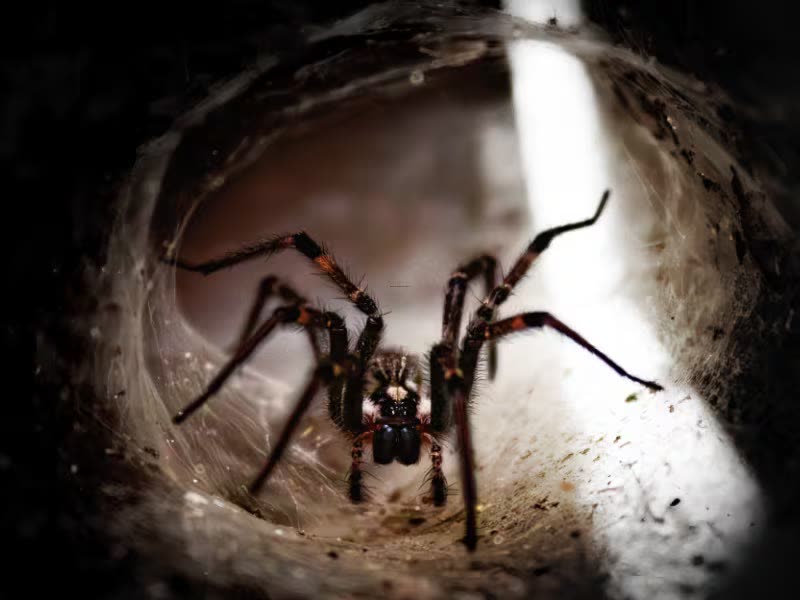
Why Are There So Many Spiders in My House? A Toronto Homeowner's Guide to Spider Season
Why you are suddenly seeing spiders everywhere
If spiders have started turning up in your Toronto home over the past few weeks, two different things are going on, and the one most people assume is happening is usually not the main one.
The large spiders indoors are mostly looking for a mate, not escaping the cold. Several of the spiders in a Toronto house live there all year. The City of Toronto’s own spider guide describes the cellar spider as able to survive only indoors in our area and breeding at any time of year, and places the common house spider and the barn funnel weaver in the corners, cellars and laundry rooms of the city’s homes. They are there all summer, unnoticed. In late summer the males mature and leave their webs to find females, and that wandering is what puts them across your floor and along your baseboards.
This pattern is well documented for funnel-weaver house spiders. A British citizen-science study of nearly 10,000 house-spider sightings found they peaked in mid-September and that 82 per cent of the spiders recorded were males, which the authors attribute to males seeking mates. London’s Natural History Museum says the same: house spiders are seen in the autumn months when males leave their webs in search of females, and, in its expert’s words, “they aren’t bigger, and there aren’t really more of them.” The spider did not move in. It was already here; it just became visible.
Some other spiders genuinely are looking for shelter. The City of Toronto guide notes that in early fall many outdoor species “can be seen on the move, feeding or looking for winter refuges,” and that “some of these are arriving in houses or garages in their search for the perfect home.” It also notes the reverse traffic: insects come indoors in autumn for the heat and shelter of the building, and end up as food for the spiders already inside. That is a real second mechanism. It just is not the explanation for the large wandering spider in your hallway.
Spider season in Ontario: the September window
Indoor sightings build through late summer, peak in September and fall away through the autumn. The table is a general pattern drawn from the sources above, not a calendar for any one species.
| Period | What is happening | What you notice indoors |
|---|---|---|
| Late summer | Male house spiders maturing and starting to roam | First large spiders appear |
| September | Peak of male wandering; outdoor species begin moving toward shelter | Most sightings; large, fast spiders in the open |
| October | Movement slows as evenings get colder | Sightings drop through the month |
| Later autumn | Frost thins the spiders still outdoors; indoor activity continues slowly | Occasional spider in heated spaces |
If you are seeing spiders in that window, you are almost certainly seeing normal seasonal behaviour rather than an infestation.
One practical consequence: sealing alone will not stop the September wave, because the house spiders driving it are already inside. It still matters for the outdoor species seeking shelter and for the insects that feed spiders year-round, which is why it stays on the prevention list below.
The spiders you will actually find in a Toronto home
Every species here is one the City of Toronto’s spider guide places in the city’s houses, garages or sheds.
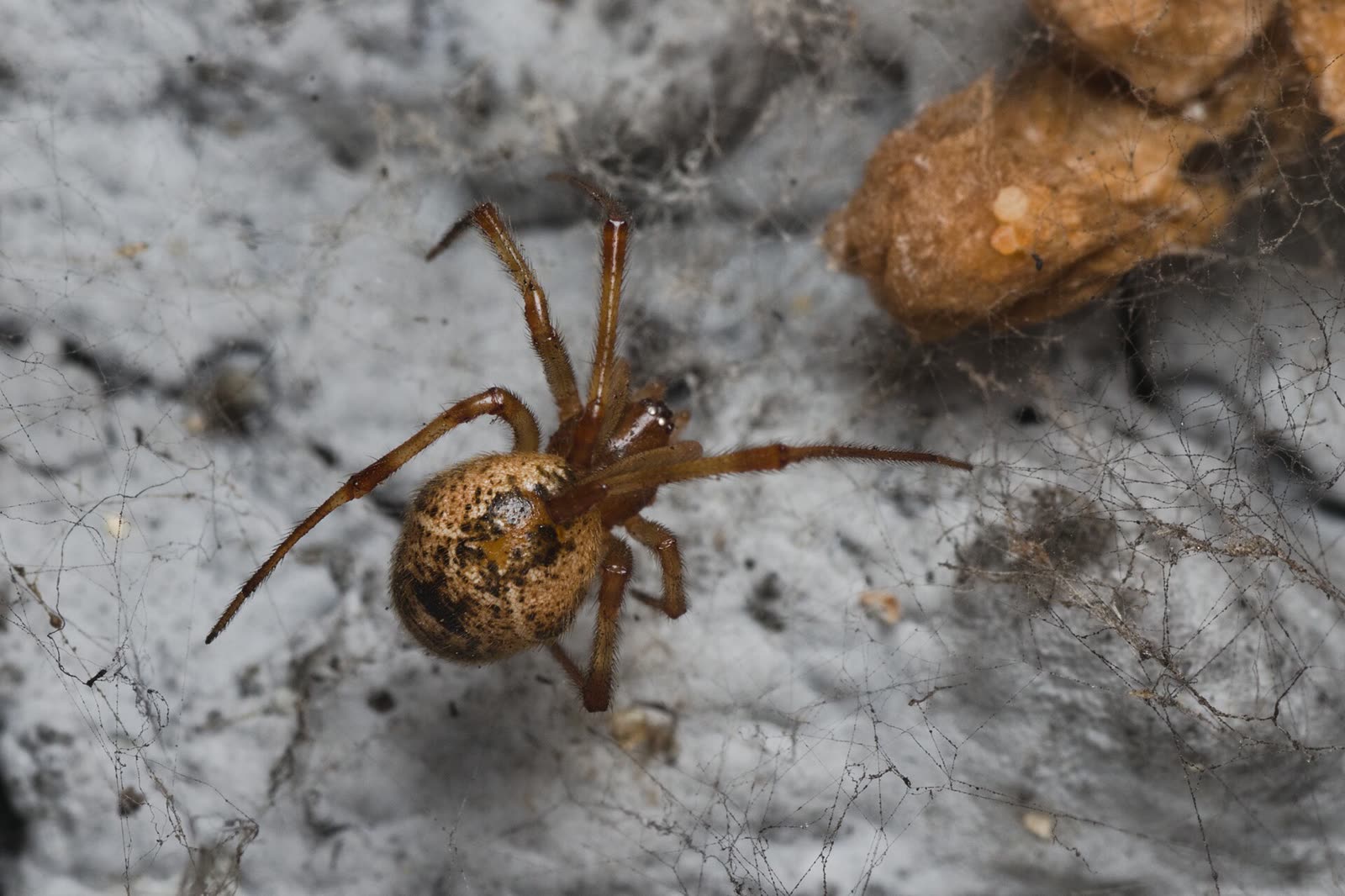
Common house spider (Parasteatoda tepidariorum) — The City guide calls this “our common house spider” and says it usually resides in corners of rooms, basements and garages. Small and tan-brown, in a tangled, irregular cobweb. Harmless.
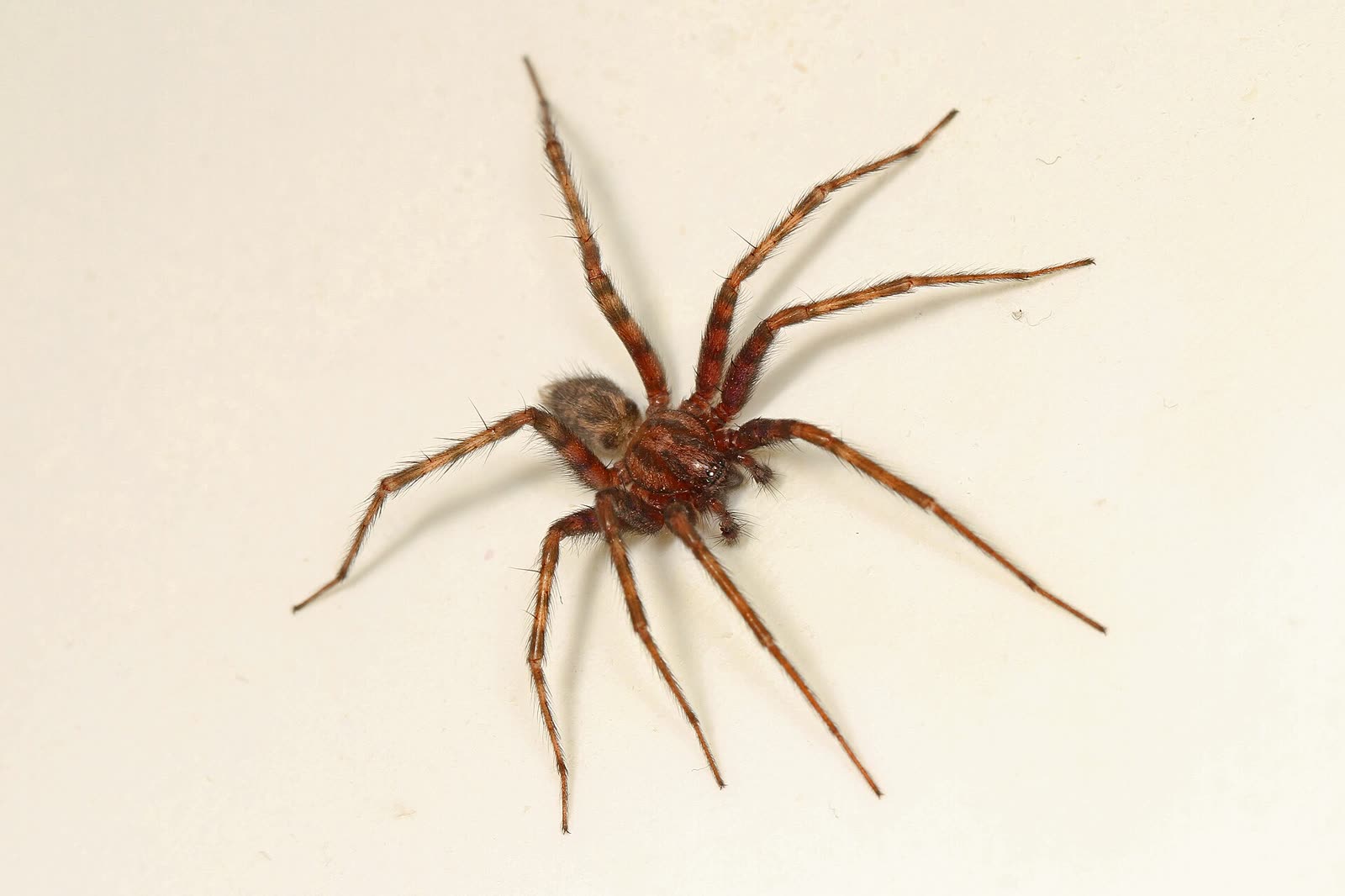
Barn funnel weaver (Tegenaria domestica) — Known in Europe as the domestic house spider; the City guide places it in damper areas such as cellars and laundry rooms, in a flat sheet web with a funnel into the corner where the spider waits. Dark orange to beige with striped legs. The guide notes they are agile hunters that will leave their webs, which is exactly what the wandering males do in September. This is the family the British house-spider study was about.
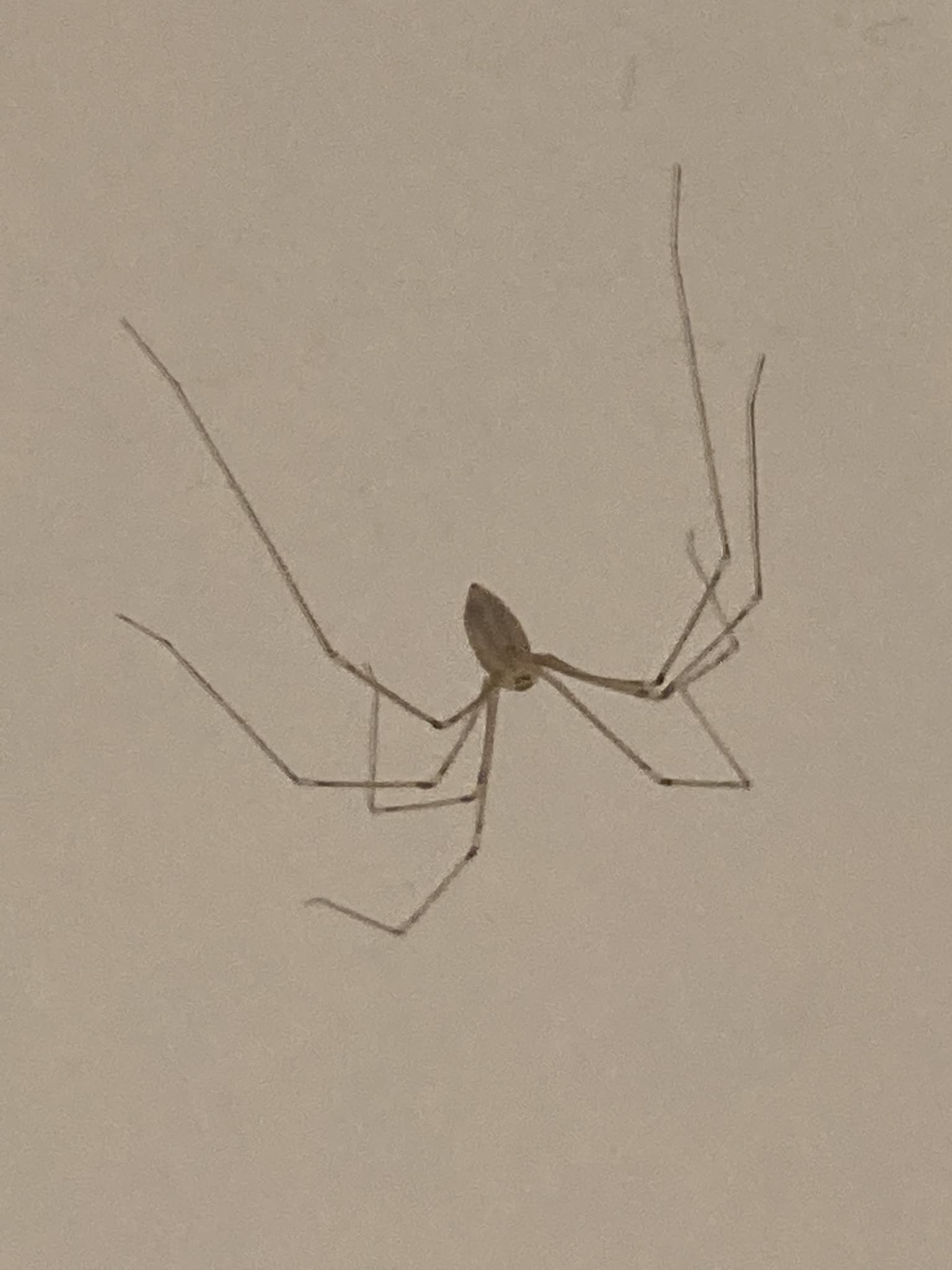
Cellar spider (Pholcus phalangioides), often called “daddy long-legs” — The City guide records it in basements across the city: very long legs on a small body, sitting quietly in a cobweb-like web in an upper corner of a dark room. Blow on one and it vibrates rapidly in its web for several seconds. There is a persistent story that this is the most venomous spider in the world but its fangs are too short to bite people. There is no evidence for either half. Like almost all spiders it does have venom; in the City guide’s words, “the venom is quite mild and not dangerous to humans.” The Burke Museum’s arachnologist calls the story “a full-fledged urban legend, with no basis in fact whatever.”
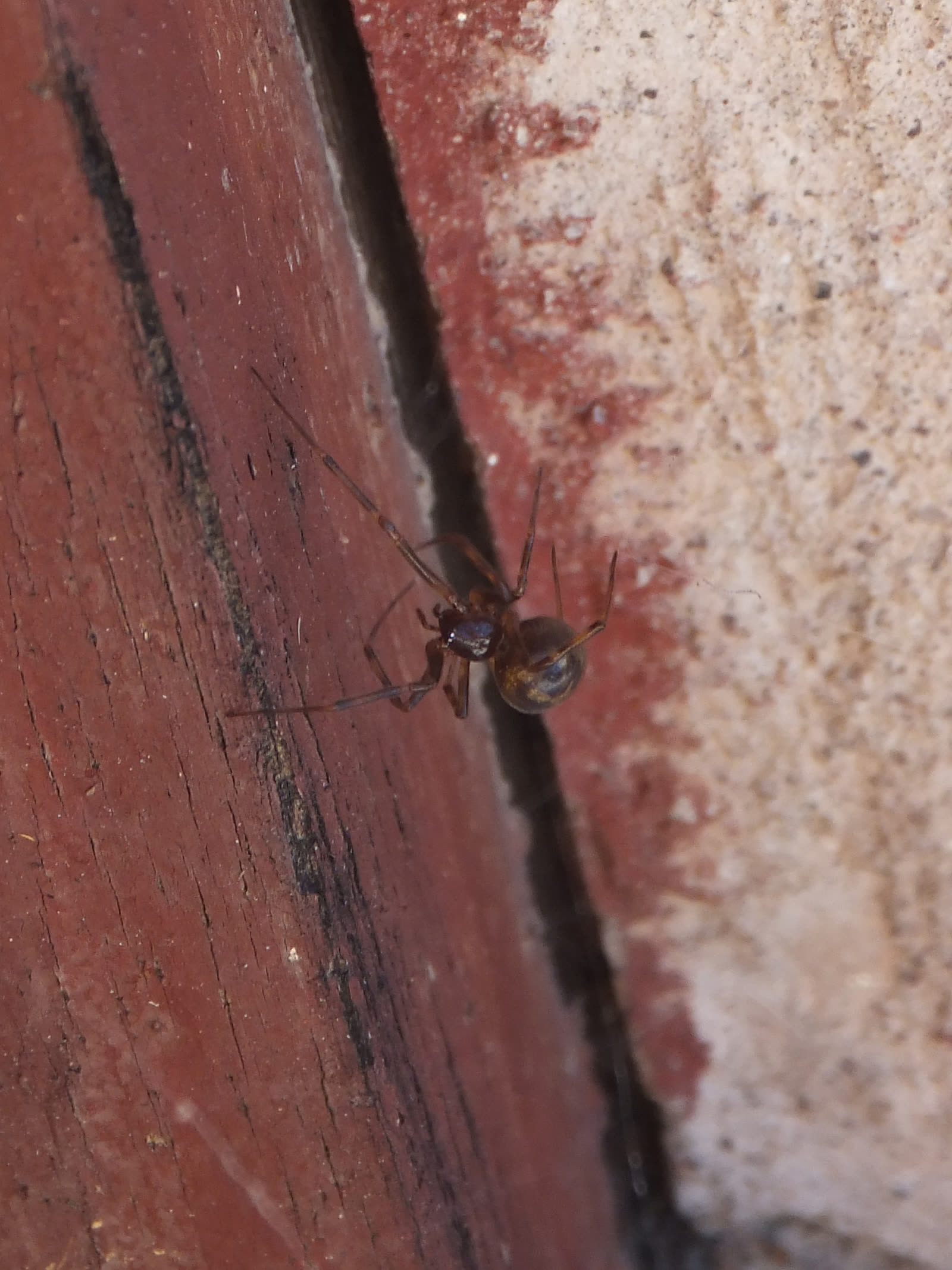
False widow, or cobweb weaver (Steatoda triangulosa) — The one worth knowing, because it is regularly mistaken for a black widow. The City guide says it is “commonly found inside houses, garages and sheds,” with a globular body and long, spindly legs, and that it “is not harmful to humans.” It lacks the red hourglass a black widow carries on the underside of the abdomen. A related species, the boreal cobweb weaver, turns up in sheds and garages.
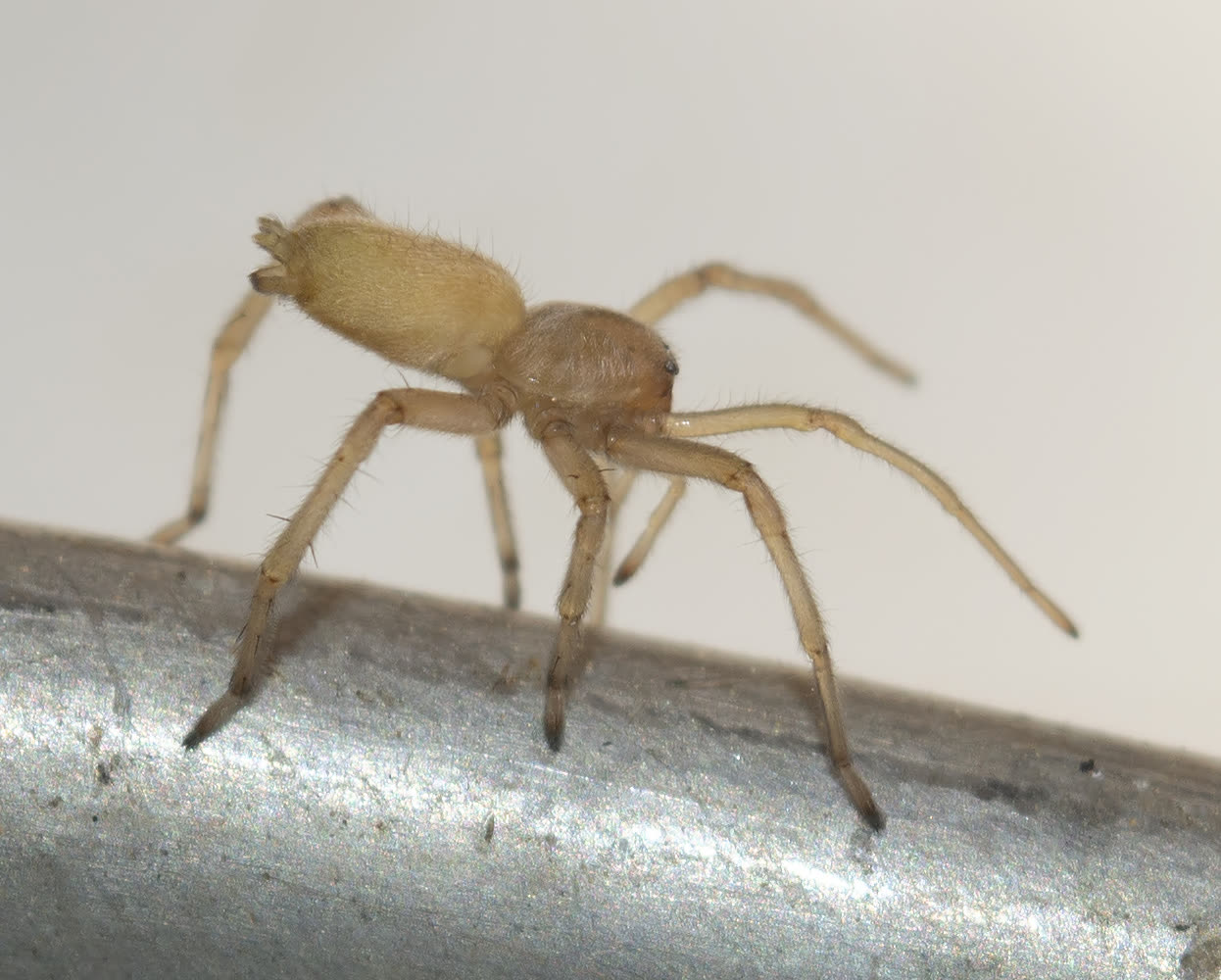
Yellow sac spider (Cheiracanthium mildei) — The City guide’s own autumn indoor spider: “often observed in the fall,” identified by a small silken bivouac in the corner between ceiling and wall, where it rests by day. Small, pale, with dark fangs. The guide notes it was once blamed for blistering bites but that “recent evidence indicates that this spider should not be considered to be of medical concern.”
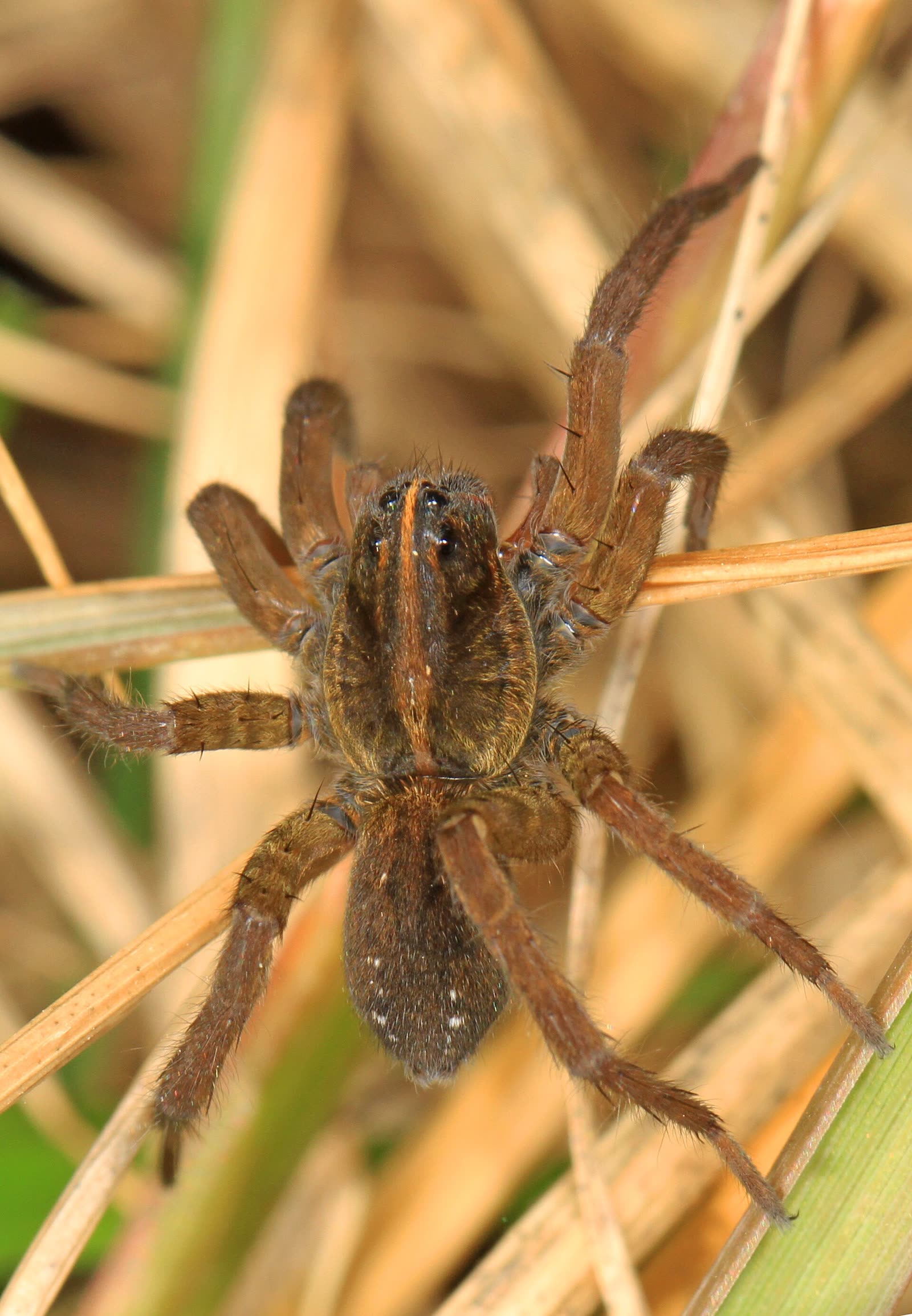
Wolf spider (family Lycosidae) — An outdoor ground hunter with no web. The City guide describes wolf spiders as strong, agile, mostly nocturnal hunters, and says outdoor species seen inside are usually accidental arrivals that do not last long indoors. In our technicians’ experience this is the spider people find sprinting across a basement floor in September and the one behind the most alarmed calls. Its size is startling; it is not dangerous.
Not sure what you are looking at? Use our pest identifier to narrow it down.
Are house spiders in Toronto dangerous?
For practical purposes, no. None of the spiders above is considered harmful to people, and bites are uncommon. As the City of Toronto guide puts it, spiders “are not aggressive by nature and will only bite when defending themselves; for example, if you pick one up and try to crush it.”
It is worth being precise about venom, because the language gets muddled. As the Royal Ontario Museum’s entomology collection manager puts it, all spiders produce venom, but not all species are harmful to humans. Canada has two black widow species of medical interest. The western black widow ranges from British Columbia to Manitoba; the northern black widow is native to Ontario and, in the ROM’s words, rare in southern Ontario. The City of Toronto guide (2012) records no northern black widow inside the city limits, with the few nearby records coming from surrounding areas, and no confirmed case of the western species living in the Greater Toronto Area. Neither is a spider you should expect to meet in a Toronto house.
And the brown recluse, which gets blamed for a great deal, has never had a verified record in Canada according to the ROM, and never in Ontario according to the City of Toronto guide, which lists “the brown recluse lives in Ontario” among its spider myths.
This page is not medical advice, and it deliberately does not try to tell you how to assess a bite. If you have been bitten and you are concerned, or you are simply unsure what bit you, speak to your healthcare provider, or call Health811 (dial 811) to talk to a registered nurse, free, at any hour. If you can safely photograph the spider, do: identification is far easier from a picture than a description.
Those little red “spiders” on your windowsill are not spiders
If what you are seeing is not a leggy spider but tiny bright-red specks moving slowly across a sunny windowsill, brick or siding, and leaving a red smear when pressed, those are almost certainly clover mites. They are a different pest with a different fix, and they do not need spider treatment.
We cover them separately in our guide to clover mites.
What actually keeps spiders out
Cut the food supply. Spiders go where the insects are; the City guide says plainly that indoor spiders “would not survive in a home if food was not available.” Yellow or amber exterior bulbs near doors and garages draw fewer flying insects than standard white light. The University of New Hampshire Extension’s advice is that yellow light means “many fewer insects,” with the caveat that it is “not a cure-all,” and that using as little exterior light as possible matters as much as the colour.
Seal the gaps. Spiders use the same openings as everything else: gaps around window and door frames, worn weatherstripping and door sweeps, foundation cracks, utility penetrations, dryer vents and gaps at the roofline. Freeze-thaw cycles can widen these, which is why older housing stock tends to see the same problem every autumn until the gaps are actually closed.
Remove webs and egg sacs properly. Vacuum them. Purdue Extension’s guidance is to clear webbing with a vacuum cleaner “so that eggs and spiders are picked up and destroyed,” and that ordinary cleaning with a cloth, dust mop or broom “is not effective.” Take the bag or canister contents outside straight away. Egg sacs are the part that matters: a sac left in place simply restarts the cycle.
What does not work. Total-release foggers and “spider bombs” are a poor tool for spiders. The University of Minnesota Extension states that surface treatments and fogs are not effective against them, and University of Kentucky entomologists note the pyrethrum in most foggers is seldom lethal to spiders and other crawling pests. Peppermint oil, vinegar and similar home remedies have no good evidence behind them. Killing the spiders you can see, while leaving their harbourage and their insect prey intact, only resets the clock to next September.
When a Toronto spider problem needs a professional
Most September spiders resolve themselves. The season ends, the wandering stops, and the house goes quiet again. It is worth bringing someone in when the pattern is more than seasonal:
| Handle it yourself | Worth a professional inspection |
|---|---|
| A few spiders over a couple of weeks in September | The same rooms every autumn, year after year, despite sealing |
| One large wandering spider in the basement | Egg sacs reappearing in the same spots after removal |
| Webs in an outdoor corner or a garage | Harbourage on a roofline or soffit you cannot safely reach |
| A single sighting that startled you | Numbers large enough to suggest an established insect population feeding them |
If it is the right-hand column, our pest control Toronto team can inspect the harbourage points and the prey population sustaining them; professional spider removal in Toronto explains what a treatment involves. For a recurring annual problem, our year-round protection plan covers the perimeter work across the seasons rather than one visit at the peak.
Frequently asked questions
Does having spiders mean my house is dirty?
No. It means your house has insects for them to eat. The City of Toronto’s spider guide is blunt that indoor spiders “would not survive in a home if food was not available,” so a spider population is a sign of a food supply, not of poor housekeeping. Reducing insects at doors and lights does more than cleaning ever will.
Will house spiders lay eggs and start an infestation?
The year-round indoor species do breed inside; the City guide notes the cellar spider can reproduce at any time of year, and that cobweb-weaving females often lay several hundred eggs in a single sac. That is why the egg sac, not the spider, is what to remove: vacuum it and take the bag outside. A few adults in September are not an infestation; egg sacs reappearing in the same spot are worth a closer look.
Is it kinder to put a spider outside?
Not always. The cellar spider, the City guide says, is “able to survive only indoors in our area,” and the same is true of the other house-dwelling species in late autumn. A spider carried outside in October is unlikely to find shelter in time. If you cannot live with it, a vacuum is quicker and no less humane than the cold.
Does killing a spider attract more?
No. There is no signal a dead spider sends to others. Spiders are drawn by the same two things every time, insects to eat and undisturbed places to hide, and those are what the prevention steps above remove.
Sources
- Spiders of Toronto, City of Toronto Biodiversity Series, 2012.
- “Spiders in Our Backyard”, Royal Ontario Museum, with Brad Hubley, Entomology, 2020.
- Hart A.G., Nesbit R., Goodenough A.E. (2018), “Spatiotemporal Variation in House Spider Phenology at a National Scale Using Citizen Science”, Arachnology 17(7):331–334.
- House spider and “Invasion of the giant spiders? Not quite”, Natural History Museum, London.
- Spider Myths, Rod Crawford, Burke Museum, University of Washington.
- “Bug Friendlier Outdoor Lighting”, University of New Hampshire Extension, 2023.
- “Spiders” (E-72), Purdue Extension.
- “Spiders”, University of Minnesota Extension.
- “Bug bombs ‘bomb out’ in war against home pests”, University of Kentucky.

12X HomeStars Best of Awards Winner
Related Articles
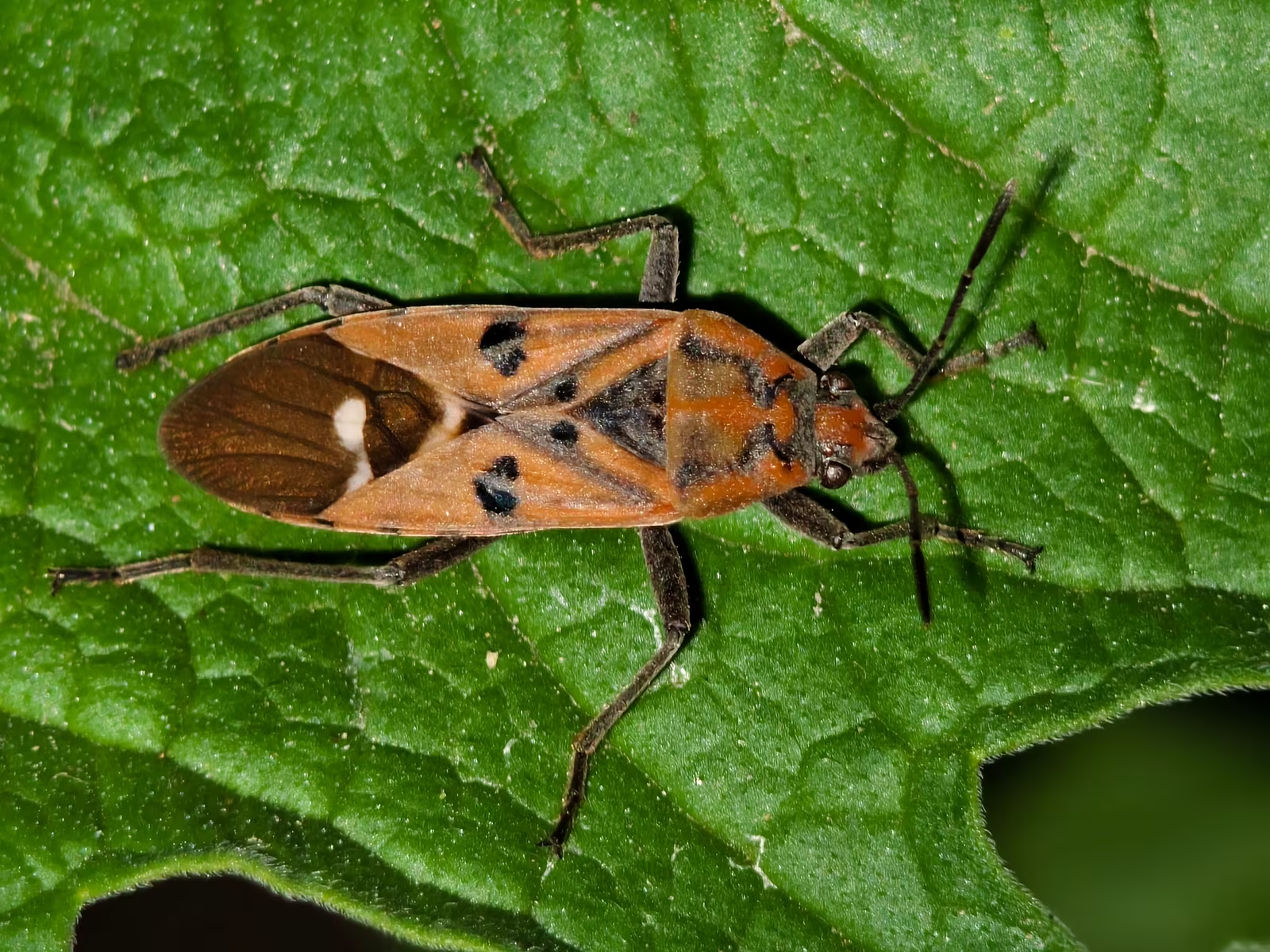
Boxelder Bugs (Maple Bugs) in Toronto: Why They Swarm Your Home in October and How to Get Rid of Them
Boxelder (maple) bugs swarm sunny Toronto walls every October. They don't bite or breed indoors. How to keep them out, what actually works, and when to call Pes
Read articlePesticon Receives HomeStars Best of Awards 2026 for Excellence in Pest Control
Pesticon has been recognized with the HomeStars Best of Awards 2026 for excellence in pest control services in Toronto. Learn about our award-winning services a
Read article
Bee Removal in Toronto: Signs, Safe & Humane Solutions (2026)
If you’ve noticed bees swarming around your Toronto home, it’s likely they’re considering your walls, attic, or shed for a hive. While bees are essential pollin
Read article