
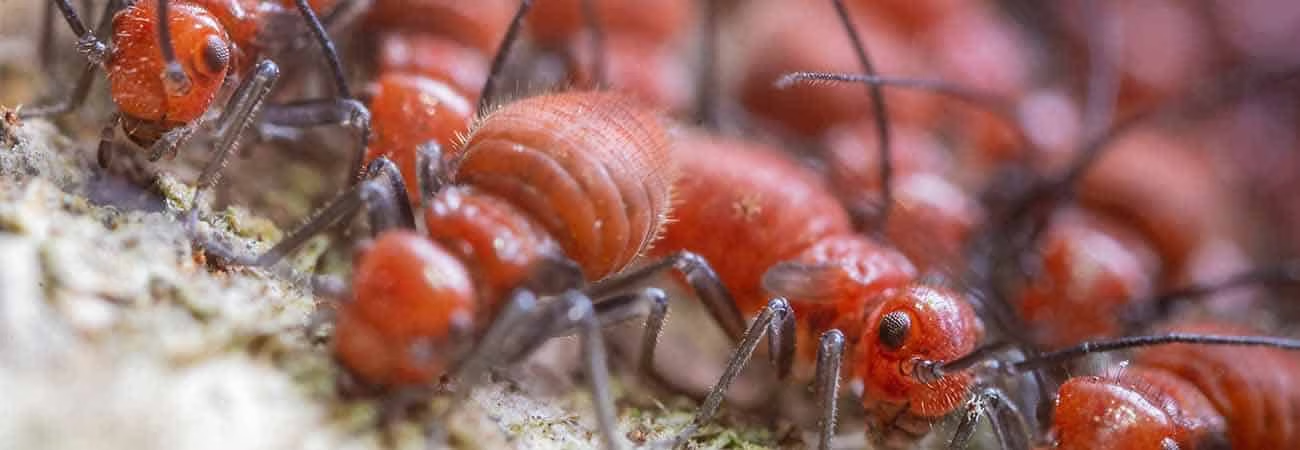
What Smells Do Termites in Guelph Hate? Updated 2026 Guide
Termites are one of the most destructive pests for homeowners in Guelph and across Canada in 2026. Among the many species found in the country, the Eastern Subterranean Termite, Western Subterranean Termite, and Pacific Dampwood Termite are most common. Subterranean termites, in particular, cause significant damage to residential wood structures, often going unnoticed until serious harm occurs. While chemical treatments are available, some natural remedies using scents and essential oils can help deter termites and prevent further infestations. Understanding which smells termites dislike, how they communicate, and how to protect your home is critical for effective termite control in 2026. This guide explains these factors and offers practical advice for homeowners in Guelph.
What Do We Know About The Smells Termites Hate?
Clemson University scientists reported that ‘Termites hate smells of cedarwood, geranium, and tea tree oil. It has also been found that clove bud, cinnamon, and garlic oils can also repel termites.’ Let us put this finding to the test:
Cedarwood as Termites-Repellant:
We know that termites repel the cedarwood smell, but it is not correct. Termites may attract less to this wood owing to the presence of allelochemicals in it. This wood’s core is somewhat termite-resistant; it still does not entirely repel termites as the white wood on the outside of the core does not resist termite in the least.
Geranium as Termites-Repellent:
Scented geraniums, if planted around your property or the affected areas of your home, attract termite predators, including spiders, ladybugs, centipedes, and praying mantises to feed on them, killing the termites and letting them leave your property. Thus, the scented geranium smell is a warning sign for termites and can help you with professional termite treatment. However, it will mean the presence of other critters on your property.
Tea Tree Oil (A Natural Remedy) and Essential Oils as Termites-Repellent:
If you do not want these pests around your property, using essential oils, such as clove bud oil, tea tree oil, garlic, or cinnamon oil, can do a lot of good. You can fill any of these essential oils in a mist sprayer and spray on the affected areas to repel termites. However, suppose you are dealing with a termite colony. In that case, you should mix 5-10 drops per water gallon and spray it directly on the territory.
Do You Know How Termites Smell or Communicate?
Termites do not have noses; thus, they do not smell the way we smell. Instead, they have antennae to detect a pheromone scent trail left by other termites to notify others in a colony about a food source. This smelling system is also a way of communication for termites that help them get their entire colony fed. Termites can also sense the specific pheromones given off by their queen.
Getting Rid of the Termites Permanently from Your Residential Space
Exterminating termites is not an easy task for homeowners. Using essential oils can definitely help in this regard. The best thing you can do is contact a pest control service based on your location: Toronto, Kitchener, Guelph, Cambridge, or any other.
Conclusion:
Termites never stop eating wood because they feed on wood to survive. However, it has been found that termites do not like the smell of cedarwood, geranium, tea tree oil, cinnamon, clove bud, and garlic oils. Termites have antennae to smell and communicate for the food source instead of a nose like human beings. You can get rid of the termites yourself, but it is not a simple thing to do. It is better to contact a pest control service to exterminate these pests for good from your residential space.

10X HomeStars Best of Awards Winner
Related Articles
Pesticon Receives HomeStars Best of Awards 2026 for Excellence in Pest Control
Pesticon has been recognized with the HomeStars Best of Awards 2026 for excellence in pest control services in Toronto. Learn about our award-winning services a
Read article
Bee Removal in Toronto: Signs, Safe & Humane Solutions (2026)
If you’ve noticed bees swarming around your Toronto home, it’s likely they’re considering your walls, attic, or shed for a hive. While bees are essential pollin
Read article
Wasp Nest Removal in Toronto: When Buzzing Becomes a Serious Problem
If you’re searching for wasp nest removal in Toronto, chances are you’ve noticed increased wasp activity around your home. Wasps can become aggressive when thei
Read article