
What Do Bed Bugs Hate? Smells, Heat and Home Remedies That Actually Work (and Don't)
TL;DR
- Smells bed bugs are said to hate: mint, lemon, tea tree and other strong scents. There is little evidence they deter bed bugs for long, and none that they remove the bugs already living in a mattress seam.
- What actually kills them: sustained heat at a lethal temperature, direct steam, a hot wash and dryer cycle, and treatment with a product registered in Canada for bed bugs on the site you are treating. Applied properly, those are the methods that can control an infestation.
- Home remedies: lemon juice and vinegar have no published evidence behind them. Of the eleven essential-oil and detergent products tested at Rutgers University, only two caused more than 90% mortality in the laboratory tests where bed bugs were sprayed directly or kept on a treated surface; all but one of the eleven barely touched the eggs; and in a separate apartment study, the geraniol-based product taken into the field cleared bed bugs from only 22% of units.
Bed bugs typically feed at night, hide in mattress seams, box springs and baseboard gaps by day, and multiply quickly. When you are losing sleep to them, it is natural to reach for anything in the kitchen cupboard that promises to drive them off. This article separates the scents that may deter a bed bug for an evening from the methods that can actually control an infestation, with the research behind each claim.
What smells do bed bugs hate?
Strong scents are a widely used home remedy. The honest answer is that the evidence for any lasting deterrent effect is thin, and no scent has been shown to clear an infestation. The Rutgers laboratory study discussed below found that even the two sprays that killed bed bugs on contact showed no detectable repellency once a carbon-dioxide source, the cue a sleeping person gives off, was present. Even if a scent affects a bed bug on a treated surface, it does not reach bugs already hidden in the seams and cracks where sprays may not penetrate. Here are the three scents readers ask about.
Fresh mint
Mint is a popular home remedy: boiling fresh mint in a pot of water spreads the scent through a room. We found no published evidence that mint repels or kills bed bugs, and it does nothing to the eggs.
Lemon juice
Lemon's sharp smell is often said to repel bed bugs, and many online guides suggest spraying diluted lemon juice around the bed. Some sites go further and claim its astringent properties harm the insects. We found no evidence for that claim; see the research section below.
Tea tree oil
Tea tree oil appears in several "natural" bed bug sprays, but it was not among the products in the Rutgers tests described below, so there is no study-backed result for tea tree oil itself. In those tests, only two of the eleven products killed bed bugs they were sprayed on directly, neither showed a detectable repellent effect, and in every case the bugs you can spray are not the ones keeping the infestation alive.
Do home remedies kill bed bugs? What the research says
Does lemon juice kill bed bugs?
We could find no published study showing that lemon juice kills bed bugs or their eggs, or that it controls an infestation. Whatever a citrus smell does to a bed bug on the surface, it does nothing to the eggs cemented inside a seam.
Does vinegar kill bed bugs?
The same applies to vinegar: we could find no published evidence that it kills bed bugs or their eggs, or that it controls an infestation. Treat it as a cleaning product, not a treatment.
Do essential oils kill bed bugs?
Essential-oil sprays are the one home remedy with real research behind them, and the results apply to the specific products tested, not to essential oils in general. In a 2014 laboratory study at Rutgers University, researchers tested nine essential-oil-based products and two detergents. Only two of the eleven, both containing geraniol or clove and peppermint oil, killed more than 90% of bed bug nymphs when sprayed directly onto them or when the bugs were forced to stay on a treated surface. Both still performed worse than conventional insecticides when the bugs could choose where to walk, only one of the eleven killed most eggs (87%), the rest had little effect on eggs, and neither of the two effective products repelled bed bugs once a carbon-dioxide source was present (Singh, Wang and Cooper, Journal of Economic Entomology, 2014).
In a separate 2014 field study, the same team applied the geraniol-based spray in infested apartments over 12 weeks. Under those study conditions, that product reduced bed bug counts by about 92%, a reduction similar to the conventional insecticide used in the same study. That is a comparison of count reduction under those conditions, not proof that the two are equally effective overall. Bed bugs were eliminated from only 22% of the treated apartments, and most of the residents still living with them did not know the bugs were there (Wang, Singh and Cooper, Insects, 2014). In the same work, two widely sold consumer bed bug sprays killed none of the field-collected bed bugs in a direct-spray test.
Why a scent cannot end an infestation
A spray affects only what it touches, and bed bugs spend much of their lives hidden where no spray reaches. Health Canada's guidance is blunt about this: whichever treatment is used, "it will only be effective if physical control methods and preventative measures are used together" (Health Canada, Bedbugs: how do I get rid of them?).
What actually kills bed bugs?
- Heat. The City of Toronto's shelter infection-control manual states that bed bugs usually die at temperatures of 50°C and that washing and drying at high temperatures kills them in bedding and clothing; where drying is the only option, it uses a 30-minute cycle in a hot dryer (City of Toronto, Infection Prevention and Control Manual, 2022). That is laundry guidance: briefly reaching one temperature in one spot does not clear a room. Whole-room heat treatment can reach the eggs and the hidden bugs that sprays miss, but only when the whole space, including furniture and wall voids, is brought to a lethal temperature and held there long enough, with the temperature monitored throughout; that is why Health Canada says heat treatments should be left to professionals. It is the method behind Pesticon's bed bug heat treatment.
- Steam. Direct steam on seams, cracks and furniture joints kills bugs on contact. Health Canada advises steaming before vacuuming, so the bugs flushed out of hiding are picked up.
- The right vacuum. Health Canada advises against handheld vacuums, vacuums with a cloth bag and vacuums with fabric hoses, because they can become infested, and recommends a HEPA-filtered vacuum for households with family members who have allergies or asthma. The City of Toronto manual adds that the vacuum should be emptied immediately and the contents sealed in a bag before disposal.
- Registered products. Health Canada lists insecticidal sprays and dusts, diatomaceous earth, pressurised carbon-dioxide snow and steam and heat treatments among the tools licensed operators use. A pesticide registered for use in Canada carries a Pest Control Products (PCP) registration number on its label; Health Canada's advice is that if the label has no PCP number, do not buy or use it, because unregistered pesticides are illegal in Canada. Registration is not permission for every use: read the label and confirm it permits use against bed bugs and on the site where you intend to apply it. A PCP number alone does not mean a product is suitable for your situation.
- A coordinated treatment. If you rent, tell your landlord right away; treatment in a multi-unit building has to be coordinated, and tenants who need help can involve a public health officer.
Signs you have bed bugs
Anyone can get bed bugs, regardless of income or housing, and early identification prevents problems before they start (Toronto Public Health, Bed Bugs). Look for:
- bites that appear overnight, often in a line or cluster, though bites alone do not confirm bed bugs; other insects and skin conditions look similar
- small dark spots on sheets and mattress seams
- shed skins and tiny pale eggs in seams, behind the headboard or along the box spring
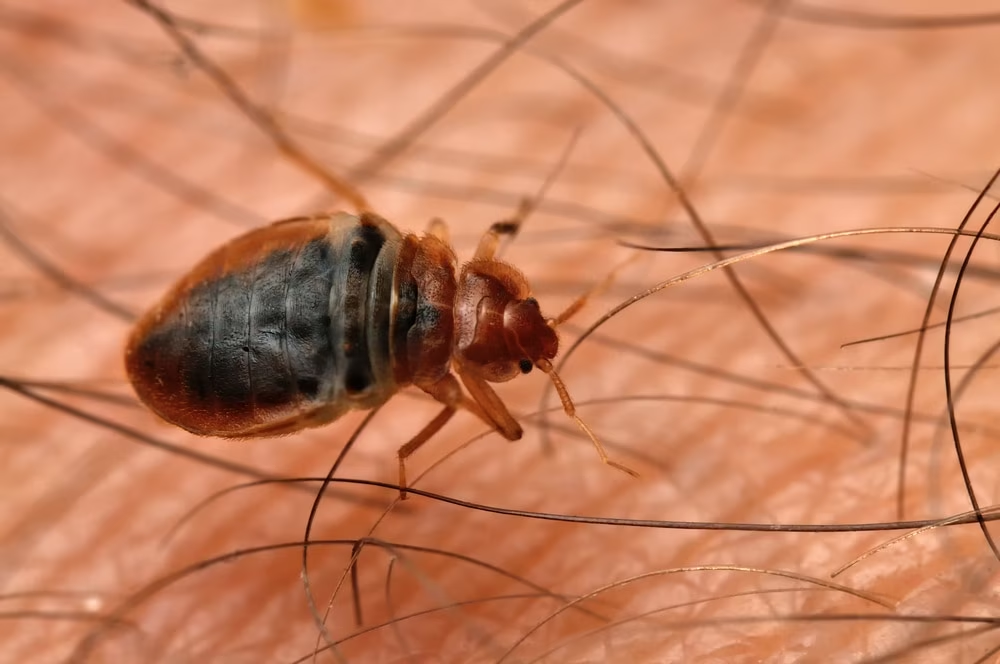
- live bugs, small, flat and reddish-brown, in the same places
Physical evidence, not bites, is what confirms an infestation. If you cannot find any, arrange a proper inspection before treating anything.
If you are not sure, a K9 bed bug inspection uses a trained detection dog to indicate where bed bugs may be present, so a technician can look for physical evidence in the right places.
Bottom line
Mint, lemon and tea tree oil are popular home remedies with little evidence behind them. Heat, steam, laundering and a registered treatment, used under the right conditions, are what actually kill bed bugs. If you are waking up with bites, finding dark spots on the sheets or seeing live bugs, book a bed bug removal service rather than another spray.

12X HomeStars Best of Awards Winner
Related Articles
Boxelder Bugs (Maple Bugs) in Toronto: Why They Swarm Your Home in October and How to Get Rid of Them
Boxelder (maple) bugs swarm sunny Toronto walls every October. They don't bite or breed indoors. How to keep them out, what actually works, and when to call Pes
Read articlePesticon Receives HomeStars Best of Awards 2026 for Excellence in Pest Control
Pesticon has been recognized with the HomeStars Best of Awards 2026 for excellence in pest control services in Toronto. Learn about our award-winning services a
Read article
Bee Removal in Toronto: Signs, Safe & Humane Solutions (2026)
If you’ve noticed bees swarming around your Toronto home, it’s likely they’re considering your walls, attic, or shed for a hive. While bees are essential pollin
Read article